
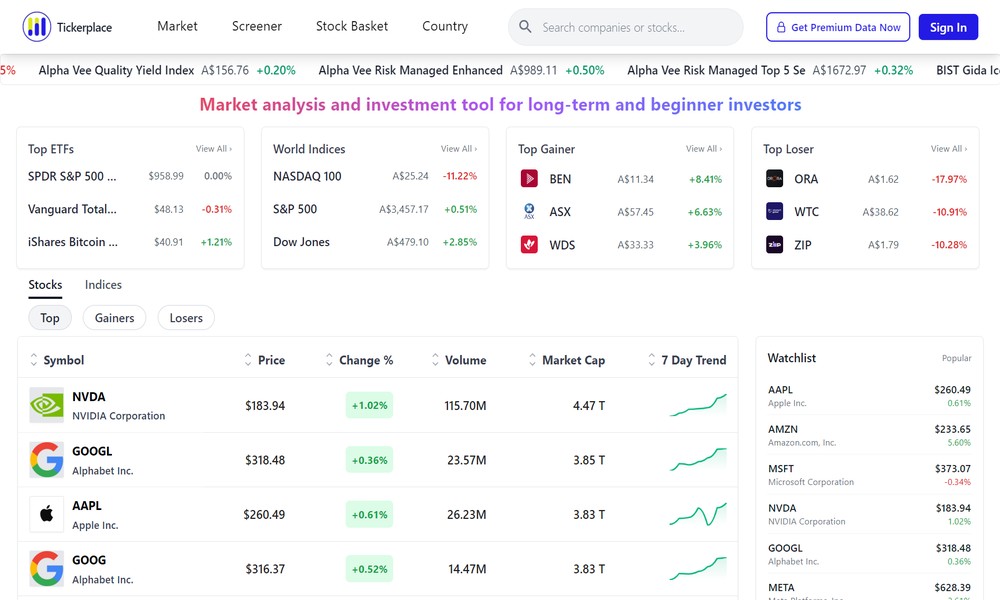
I look at stock analysis tools through a simple lens. If a platform helps you move from raw data to a clear decision, it has value. If it slows you down or hides insight behind complexity, it works against you. One example worth studying is stock analysis tools, which shows how a modern platform can bring clarity to a process that often feels scattered.
I focus on tools that make analysis easier to follow, not harder to understand. You are here to make better decisions, not to get buried in numbers. The right setup should help you filter opportunities, compare companies, and understand value without friction. That is what I will break down.
Why stock analysis tools matter
If you rely on guesswork, you will always second guess your decisions. Strong investing comes from structure.
A solid stock analysis platform helps you:
- Find new opportunities using filters instead of random searching
- Compare companies using consistent metrics
- Understand valuation instead of relying on price alone
- Track performance and adjust your thinking over time
Without tools, you are reacting. With tools, you are deciding.
What to look for in a stock analysis platform
I suggest keeping your standards simple. A good platform should cover a few core areas well.
Stock screener
A stock screener is your starting point. It helps you narrow thousands of stocks into a short list that fits your criteria.
Look for filters like:
- Market cap
- Price to earnings ratio
- Revenue growth
- Profit margins
The best stock screener lets you adjust filters quickly and see results in real time.
Financial data and ratios
Numbers matter, but only if they are organized clearly.
You should be able to review:
- Earnings per share
- Return on equity
- Debt levels
- Cash flow
Clean presentation makes a difference. If you cannot scan data fast, the tool slows you down.
Valuation tools
Price does not equal value. A strong investment research platform should help you estimate whether a stock is under or overvalued.
This includes:
- Intrinsic value estimates
- Price to earnings comparisons
- Growth expectations
These tools help you avoid overpaying and spot opportunities others miss.
Comparison tools
You should never analyze a company in isolation. Side by side comparison shows you what stands out.
A strong comparison tool helps you:
- Compare financial performance
- Evaluate valuation differences
- Identify stronger business models
This step sharpens your judgment.
How Tickerplace approaches stock analysis
Tickerplace stands out because they focus on clarity. Many stock research tools either overwhelm beginners or limit serious investors. They aim to solve both problems.
Their platform combines several tools into one place:
- A stock screener for filtering opportunities
- Structured financial data for quick review
- Valuation models to assess pricing
- Comparison tools for side by side analysis
- Portfolio tracking for ongoing management
This matters because it removes the need to jump between multiple platforms. You stay focused on analysis instead of searching for data.
Another advantage is how they present information. Financial data is organized in a way that makes sense. You can move from screening to deeper analysis without changing tools or losing context.
Why this matters for beginners
If you are new to investing, complexity is the biggest barrier. Many platforms assume you already understand everything.
A better approach is gradual learning.
Tickerplace supports this by:
- Simplifying financial data without removing depth
- Providing guided insights on key metrics
- Keeping the interface clean and easy to navigate
You can start with basic filters, then move into deeper analysis as your understanding improves.
Why this matters for experienced investors
If you already analyze stocks, your focus shifts to efficiency.
You want:
- Faster filtering
- Cleaner comparisons
- Reliable valuation data
Tickerplace helps by organizing everything in one place. This reduces time spent switching tools and increases time spent making decisions.
It also supports deeper analysis through access to financial ratios and historical data, which are critical for long term investing.
How to actually analyze stocks using these tools
I keep the process simple and repeatable. You can follow this structure:
Step 1: Screen for opportunities
Use an online stock screener to filter based on your criteria. Focus on a small list of candidates.
Step 2: Review fundamentals
Look at revenue, earnings, and profitability. Avoid companies with weak fundamentals unless you understand the risk.
Step 3: Check valuation
Compare the current price to estimated value. Ask if the stock is fairly priced.
Step 4: Compare alternatives
Place similar companies side by side. This helps you see which one stands out.
Step 5: Make a decision
Once the data is clear, act based on your criteria. Avoid overthinking once the work is done.
Final perspective
Stock market tools for beginners and experienced investors should serve one purpose. They should help you think clearly.
Tickerplace is a strong option because they bring together stock analysis software, research tools, and valuation insights in a way that stays practical. The platform removes friction, organizes data, and keeps your focus on decision making.
If you choose your tools carefully and follow a consistent process, you put yourself in a position to make better investment decisions over time.
